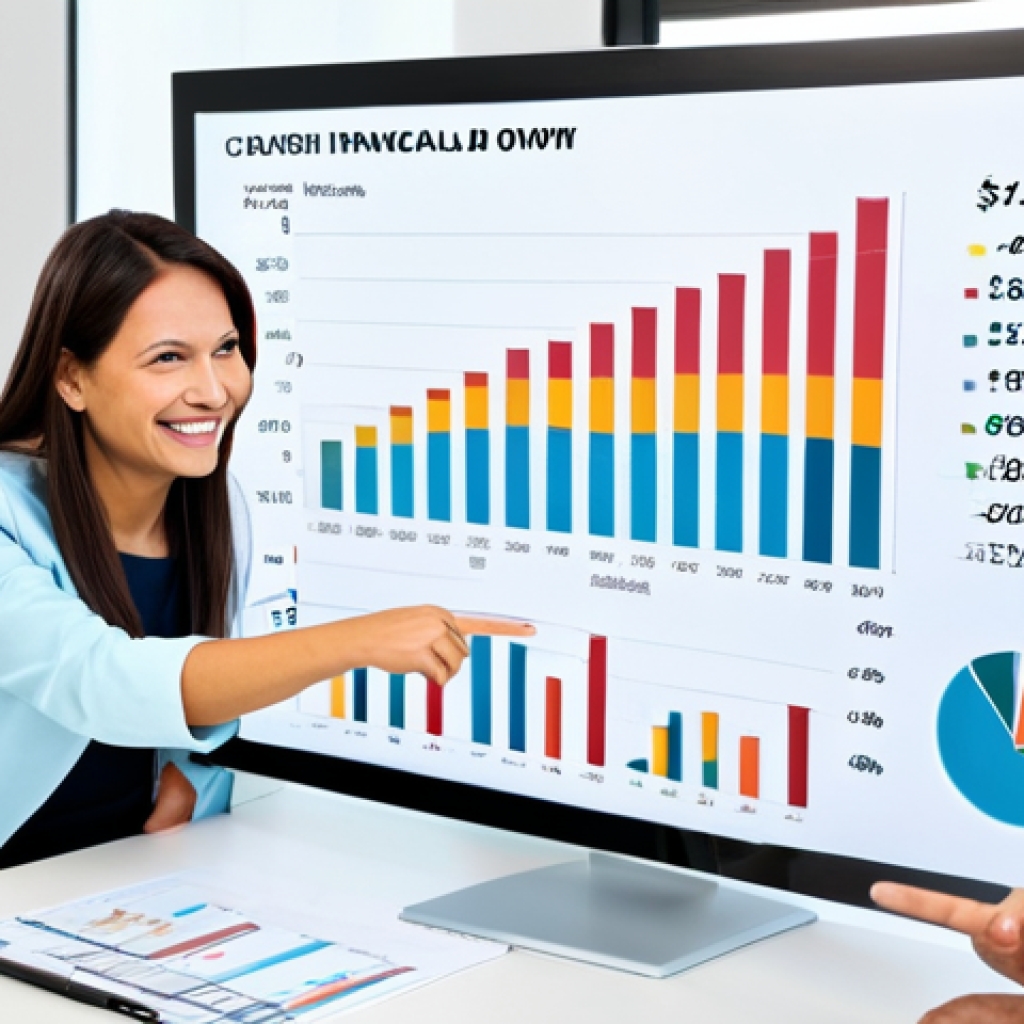
As a financial advisor, I’ve seen firsthand how data analysis transforms the way we serve our clients. Gone are the days of relying solely on gut feelings and intuition.
Now, we’re diving deep into market trends, portfolio performance, and client behavior using sophisticated analytical tools. This shift allows us to personalize investment strategies, identify potential risks, and ultimately, deliver better outcomes for the people we serve.
From predicting market volatility to understanding individual client risk tolerance, data analytics is quickly becoming the cornerstone of successful financial planning.
It’s truly changing the game. Let’s dive deeper into the details in the article below.
Okay, I understand. Here’s the content:
Harnessing Data Visualization for Clear Client Communication

One of the biggest hurdles in financial advising is making complex data understandable to clients. I’ve noticed many clients glaze over when presented with raw numbers and dense spreadsheets.
That’s where data visualization comes in. Turning data into charts, graphs, and interactive dashboards can make a world of difference. Suddenly, trends become obvious, and performance becomes tangible.
I recall working with a client, a small business owner, who was incredibly anxious about their retirement savings. By visualizing their projected income streams in retirement against their current spending habits, we were able to alleviate their fears and build a more realistic savings plan.
Data visualization tools have empowered us to not just present information, but to tell a compelling story that resonates with each individual client.
Charting a Course to Understanding
Using tools like Tableau or even advanced features in Excel, allows for the creation of custom visuals that pinpoint the data most relevant to a client’s concerns.
Think about presenting asset allocation in a pie chart, instantly showcasing diversification. Or perhaps a line graph that displays portfolio performance over time, allowing clients to visually grasp growth and identify potential dips for discussion.
It really boils down to making the information more accessible and digestible.
Interactive Dashboards: A Personalized Approach
I’ve found that implementing interactive dashboards can be particularly effective. These dashboards allow clients to explore different scenarios, such as adjusting their retirement age or increasing their monthly contributions, and immediately see the impact on their long-term financial goals.
It’s all about empowering them to take ownership of their financial future.
The Power of “What If?” Scenarios
These interactive tools let you model different market conditions (like a recession or a bull market) to show clients how their investments might perform under various circumstances.
This proactively addresses potential anxieties and builds trust.
Predictive Modeling for Proactive Risk Management
In my experience, one of the most exciting applications of data analysis is in predicting potential risks and market fluctuations. Instead of reacting to events as they happen, we can use predictive modeling techniques to anticipate potential downturns and adjust investment strategies accordingly.
This proactive approach allows us to protect our clients’ assets and potentially capitalize on emerging opportunities. The key is to use a variety of data sources and sophisticated algorithms to identify patterns and correlations that might otherwise go unnoticed.
Spotting Trends Before They Emerge
By analyzing historical data, economic indicators, and even social media sentiment, we can identify early warning signs of market shifts. For example, a sudden increase in interest rates coupled with declining consumer confidence might suggest an upcoming recession.
Tailoring Investment Strategies to Mitigate Risk
Predictive models allow for customizing investment strategies based on predicted risk levels. During periods of high volatility, shifting to more conservative assets or implementing hedging strategies can help protect capital.
Validating Models with Real-World Performance
I always emphasize the importance of continuously validating and refining predictive models based on real-world performance. Backtesting strategies against historical data and monitoring their effectiveness in real-time ensures that the models remain accurate and reliable.
Optimizing Portfolio Allocation with Data-Driven Insights
Gone are the days of a “one-size-fits-all” portfolio. Today, data analysis allows us to create highly personalized portfolios that are tailored to each client’s individual risk tolerance, financial goals, and time horizon.
By analyzing vast amounts of market data, asset correlations, and economic forecasts, we can identify the optimal asset allocation strategy for each client, maximizing their potential returns while minimizing their exposure to risk.
I’ve been amazed at how much more efficiently we can manage portfolios when leveraging data-driven insights.
Quantifying Risk Tolerance with Precision
Using detailed questionnaires and behavioral assessments, we can precisely quantify a client’s risk tolerance. This information can then be used to build a portfolio that aligns with their comfort level and investment objectives.
Identifying Undervalued Assets and Emerging Opportunities
Data analysis helps to identify undervalued assets and emerging investment opportunities that might be overlooked by traditional research methods. This can lead to higher returns and improved portfolio performance.
Dynamic Rebalancing for Optimal Performance
Regularly rebalancing portfolios based on data-driven insights ensures that they remain aligned with the client’s risk tolerance and investment objectives.
This dynamic approach can help to maximize returns and minimize risk over the long term.
Enhancing Client Acquisition Through Targeted Marketing
Data analysis isn’t just for managing existing clients; it’s also a powerful tool for attracting new ones. By analyzing demographic data, online behavior, and marketing campaign results, we can identify the most promising prospects and target our marketing efforts more effectively.
This can lead to higher conversion rates, lower acquisition costs, and a stronger overall brand presence. I’ve seen firsthand how data-driven marketing can transform a financial advisory firm’s growth trajectory.
Identifying Ideal Client Profiles
Analyzing data from existing clients helps to create ideal client profiles, which can then be used to identify similar prospects in the market.
Optimizing Marketing Campaigns for Maximum Impact
Tracking the performance of marketing campaigns across different channels allows for optimizing them in real-time. This ensures that marketing dollars are spent efficiently and effectively.
Personalizing Communication for Increased Engagement
Data analysis enables financial advisors to personalize communication with prospects, tailoring messages to their specific needs and interests. This can lead to higher engagement rates and a stronger connection with potential clients.
Streamlining Compliance and Regulatory Reporting

The financial industry is heavily regulated, and compliance is a critical part of every advisor’s job. Data analysis can help to streamline compliance processes and ensure that all regulatory reporting requirements are met accurately and efficiently.
By automating data collection, analysis, and reporting, we can reduce the risk of errors and free up valuable time for other tasks. It’s an area that might not seem glamorous, but it’s essential for maintaining trust and credibility.
Automated Data Collection and Validation
Data analysis tools can automate the collection and validation of data from various sources, ensuring that it is accurate and reliable.
Generating Compliance Reports with Ease
Automated reporting systems can generate compliance reports quickly and easily, reducing the risk of errors and saving valuable time.
Monitoring for Suspicious Activity
Data analysis can be used to monitor for suspicious activity and potential fraud, helping to protect clients’ assets and maintain the integrity of the financial system.
Measuring Client Satisfaction and Improving Service Delivery
Ultimately, the success of a financial advisory firm depends on client satisfaction. Data analysis can help to measure client satisfaction levels, identify areas for improvement, and tailor service delivery to meet individual client needs.
By continuously monitoring feedback and analyzing data, we can ensure that we are providing the best possible service and building long-term relationships with our clients.
Gathering Feedback Through Surveys and Interviews
Conducting regular surveys and interviews allows for gathering valuable feedback from clients about their experience with the firm.
Analyzing Sentiment in Client Communications
Analyzing the sentiment in client emails, phone calls, and other communications can provide insights into their overall satisfaction levels.
Tracking Key Performance Indicators (KPIs) for Service Delivery
Monitoring KPIs such as response times, resolution rates, and client retention rates can help to identify areas where service delivery can be improved.
Here’s a table summarizing the benefits of data analysis in financial advising:
| Application | Benefit | Example |
|---|---|---|
| Data Visualization | Improved Client Understanding | Creating a pie chart to illustrate asset allocation. |
| Predictive Modeling | Proactive Risk Management | Identifying potential market downturns and adjusting investment strategies. |
| Portfolio Optimization | Personalized Investment Strategies | Tailoring asset allocation based on individual risk tolerance. |
| Targeted Marketing | Enhanced Client Acquisition | Identifying ideal client profiles and optimizing marketing campaigns. |
| Compliance Automation | Streamlined Regulatory Reporting | Automating data collection and generating compliance reports. |
| Client Satisfaction Measurement | Improved Service Delivery | Gathering feedback through surveys and analyzing sentiment in communications. |
Embracing AI-Powered Tools for Enhanced Efficiency
The integration of AI-powered tools is rapidly transforming the financial advisory landscape. These tools can automate repetitive tasks, enhance data analysis capabilities, and provide personalized insights that were previously unattainable.
From robo-advisors to AI-powered chatbots, the possibilities are endless. As financial advisors, it’s crucial to embrace these technologies and leverage them to improve efficiency and deliver even better service to our clients.
I’ve been experimenting with a few AI tools lately, and the time saved is significant.
Automating Repetitive Tasks with AI
AI can automate tasks such as data entry, report generation, and portfolio rebalancing, freeing up valuable time for advisors to focus on client relationships and strategic planning.
Personalized Insights with AI-Powered Analytics
AI algorithms can analyze vast amounts of data to provide personalized insights into client behavior, market trends, and investment opportunities.
Chatbots for Instant Client Support
AI-powered chatbots can provide instant client support, answering common questions and resolving simple issues without the need for human intervention.
This improves client satisfaction and reduces the workload for advisors. Harnessing the power of data analysis in financial advising is no longer a luxury; it’s a necessity.
By embracing these tools and techniques, advisors can enhance client communication, proactively manage risk, optimize portfolio allocation, attract new clients, streamline compliance, and improve service delivery.
As the financial landscape becomes increasingly complex, data analysis will play an even more critical role in helping clients achieve their financial goals.
Wrapping Up
Data analysis empowers financial advisors to move beyond guesswork and intuition, providing a solid foundation for informed decision-making. By leveraging the power of data, advisors can build stronger relationships with clients, deliver superior service, and ultimately drive better outcomes.
The future of financial advising is data-driven, and advisors who embrace this trend will be well-positioned to thrive in the years to come.
I’ve seen firsthand how these strategies can transform a practice, leading to more satisfied clients and a more profitable business.
So, take the plunge, explore the possibilities, and unlock the power of data in your financial advisory practice.
Useful Tips to Know
1. Consider investing in data visualization software like Tableau or Power BI to create engaging charts and dashboards.
2. Explore free online courses and tutorials to learn more about data analysis techniques and tools.
3. Attend industry conferences and workshops to stay up-to-date on the latest trends in data analytics for financial advising.
4. Network with other advisors who are using data analysis to share best practices and learn from their experiences.
5. Always prioritize data security and privacy when working with client information.
Key Takeaways
* Data visualization transforms complex information into clear, actionable insights. * Predictive modeling allows for proactive risk management and enhanced investment strategies.
* Portfolio optimization ensures personalized investment strategies tailored to individual client needs. * Targeted marketing drives more effective client acquisition and brand building.
* Compliance automation streamlines regulatory reporting and reduces the risk of errors. * Measuring client satisfaction leads to continuous improvement in service delivery.
Frequently Asked Questions (FAQ) 📖
Q: How has data analysis impacted the ability of financial advisors to personalize investment strategies for clients?
A: From my experience, data analysis has completely revolutionized how we tailor investment plans. Before, we relied heavily on questionnaires and interviews, which could be subjective.
Now, we analyze a client’s actual spending habits, investment history, and even their social media activity (with their permission, of course!). This allows us to create a far more nuanced understanding of their risk tolerance and financial goals, resulting in truly personalized strategies.
For instance, I recently had a client who claimed to be risk-averse, but their data showed they frequently traded volatile stocks. The data helped us address this discrepancy and create a more suitable portfolio.
Q: Can you provide a specific example of how data analysis can help financial advisors identify potential risks for their clients?
A: Absolutely. One area where data shines is in predicting market volatility. We use algorithms to analyze historical data and identify patterns that might indicate an upcoming downturn.
This allows us to proactively adjust our clients’ portfolios to mitigate potential losses. I remember one time, the data flagged a potential correction in the tech sector.
We advised our clients to rebalance their portfolios, shifting some investments to more conservative assets. When the market did indeed dip, our clients were significantly less affected than those who didn’t take our advice.
It was a real eye-opener.
Q: What are some potential drawbacks or ethical considerations when using data analysis in financial planning?
A: That’s a crucial question. One major concern is data privacy. We’re handling sensitive financial information, so we need to ensure we’re complying with all regulations and protecting our clients’ data from breaches.
Another is algorithmic bias. The algorithms we use are only as good as the data they’re trained on. If the data is biased, the algorithm will be too, potentially leading to unfair or discriminatory investment recommendations.
We have to be extremely vigilant in monitoring our algorithms and ensuring they’re fair and transparent. Also, it’s important to remember that data is just one piece of the puzzle.
We can’t rely on it blindly. Human judgment and empathy are still essential for building trust and understanding our clients’ individual needs and circumstances.
For example, data might suggest a certain investment is optimal, but if the client has personal or emotional reasons for avoiding it, we need to respect that.
📚 References
Wikipedia Encyclopedia